

Queensland’s Schools Under Pressure: Planning for Growth, Ageing Assets, and an Olympic Moment.
The scale of the challenge
South East Queensland is in the midst of a demographic transformation of historic proportions. The Shaping SEQ regional plan projects the arrival of 2.2 million new residents across the region by 2046, demanding the delivery of around 900,000 new homes to accommodate this growth. These are not abstract projections, they represent real communities, real families, and real children who will need access to quality schooling from day one.

Compounding this challenge is the 2032 Brisbane Olympic and Paralympic Games. While the Games represent a once-in-a-generation opportunity for Queensland, they also create a powerful acceleration effect on infrastructure investment and delivery timelines. Construction labour markets will tighten. Material costs will escalate. Projects that are not in the pipeline now risk being crowded out by Olympic-driven demand or priced beyond feasibility at the point they are finally ready to proceed.
For school authorities, this is not a distant planning horizon. It is an immediate imperative. The schools that will serve Queensland’s next generation of students must be planned, funded, and approved now, before the construction window SYDNEY I BRISBANE narrows further and before communities are left without the infrastructure they were promised.
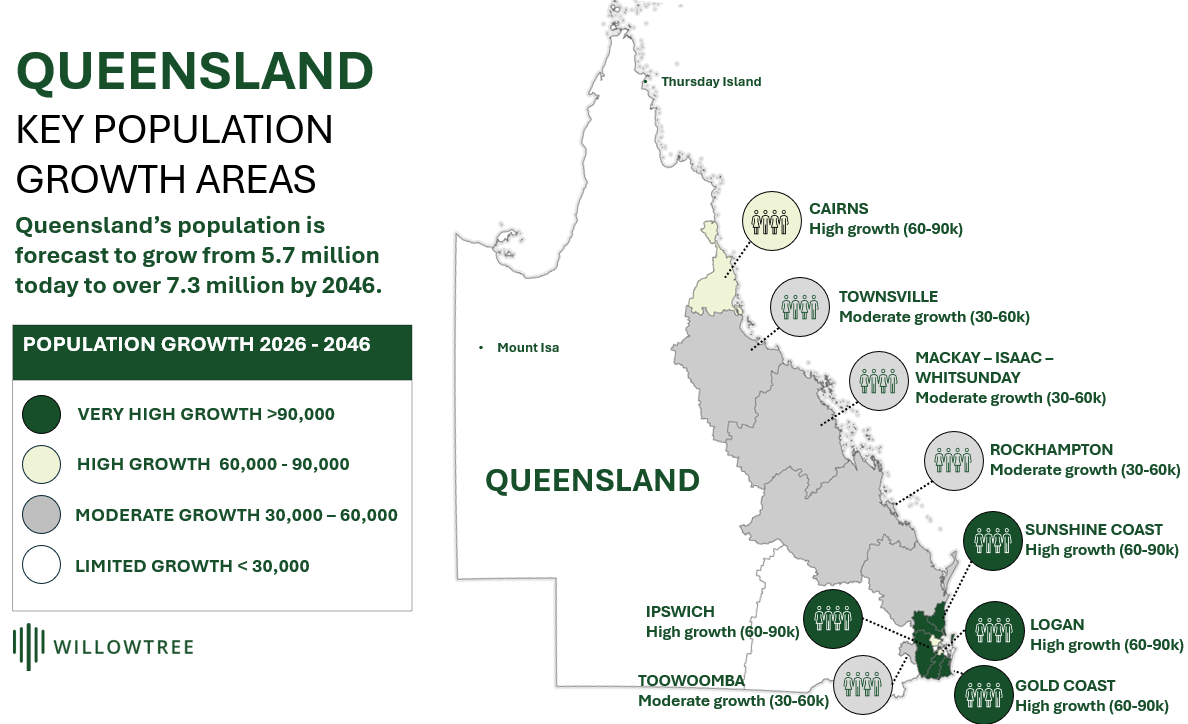
Figure 1: Queensland’s projected population growth(2026)
Queensland’s Education Landscape: A Complex System
Queensland’s school system is one of the most complex in the country, comprising over 1,800 schools across three distinct sectors and a diverse network of governing bodies, each with their own governance structures, capital programs, and planning obligations. Understanding this landscape is a prerequisite to understanding the planning challenge.
At the apex of the government sector sits the Queensland Department of Education, which administers approximately 1,266 state schools across the state. The Catholic sector, represented at the peak level by Catholic Education Queensland Limited (CEQL), the successor body to QCEC from January 2025. CEQL encompasses 313 schools operating across five dioceses and several religious institute school SYDNEY I BRISBANE authorities. Brisbane Catholic Education alone operates 146 schools across the Archdiocese of Greater South East Queensland. The independent sector, supported by the Independent Schools Queensland (ISQ), spans Anglican, Lutheran, PMSA, Christian Education Ministries, and a wide array of faith-based and community schools.
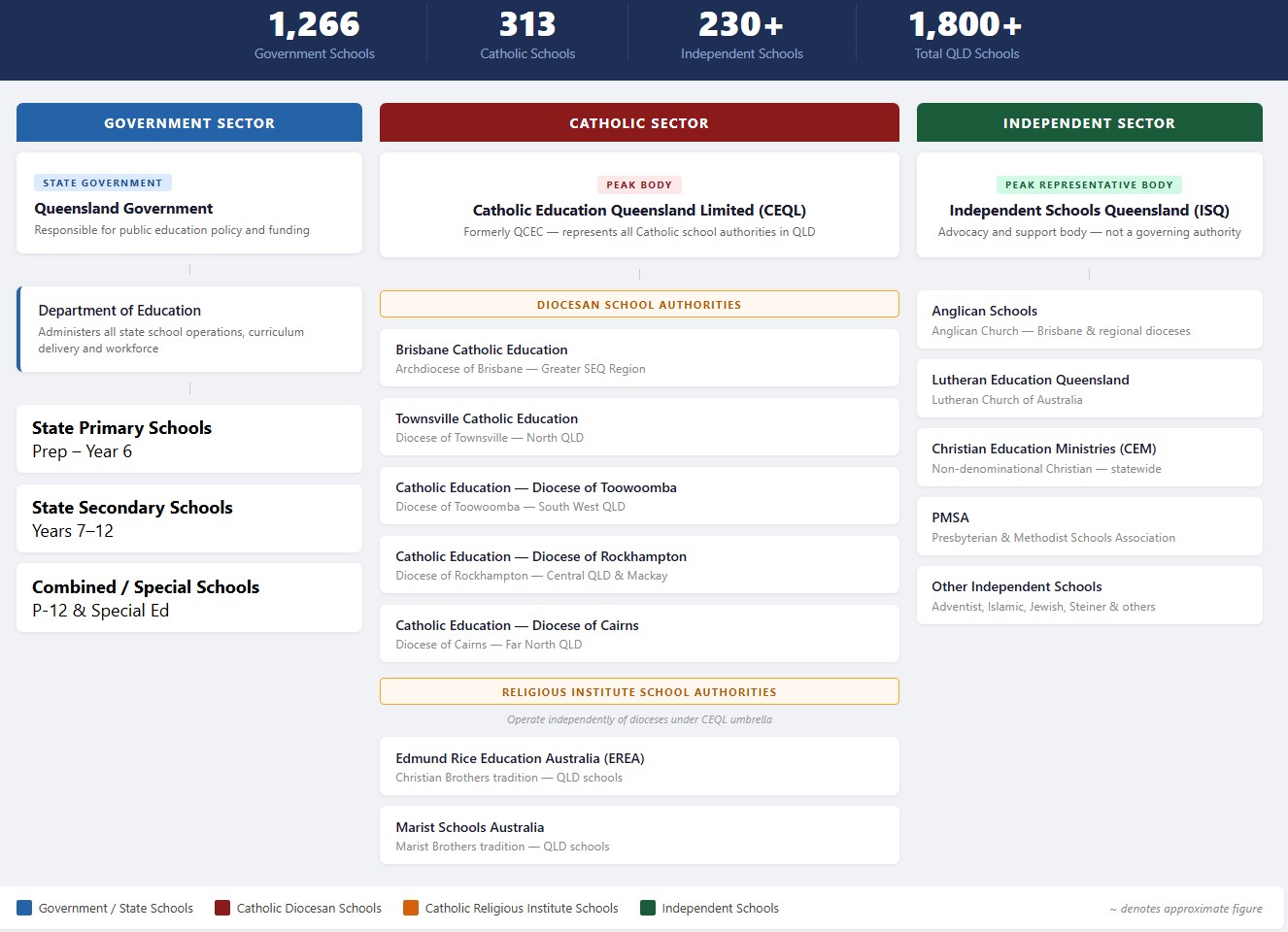
Figure 2: Queensland School Education Landscape — Governing Bodies and School Counts (2026)
Each of these bodies is a distinct planning entity, with its own approach to demographic forecasting, capital investment, site acquisition, and infrastructure delivery. The underlying challenge that each of these are facing: demand is outpacing supply, and the schools cannot keep pace with the speed of growth.
New Schools: The Greenfield shortfall
The Property Council of Australia has drawn national attention to the growing shortfall of school places in Australia’s key growth corridors. The scale of the challenge is significant: Australia’s greenfield growth corridors alone are projected to require between 120 and 130 new primary schools and 35 to 40 new secondary schools just to meet the demand forecast over the next five years. In Queensland, the SEQ growth corridors, stretching from the Sunshine Coast to the Gold Coast and west into Ipswich, Moreton Bay, and Logan, represent the sharpest expression of this national challenge.
The delivery of a new school campus is not a simple or quick undertaking. It typically requires years of demographic due diligence, site identification, feasibility analysis, planning approvals, and capital funding before a single student enrols. In Queensland, the Ministerial Infrastructure Designation (MID) process provides a streamlined planning pathway for school delivery, but even with this mechanism the lead times between identifying a need and opening a school can span five to ten years.
For non-government schools in particular, this challenge is acute. Unlike state schools, which benefit from government-funded site identification and delivery programs, non-government schools must self-fund acquisitions and seek capital grants for new campuses. This places a premium on early, evidence-based planning. Identifying sites before they are consumed by residential development, and building the demographic case for investment before the opportunity closes.
In Queensland’s growth corridors, the race to secure school sites is real. Communities are forming faster than infrastructure can follow, and the schools that should anchor those communities are, in many cases, still years away from approval.
Existing Schools: The silent crisis of ageing infrastructure
While the greenfield shortfall attracts understandable attention, there is a parallel and equally urgent challenge facing Queensland’s existing school stock. Across all SYDNEY I BRISBANE sectors, a significant proportion of Queensland’s schools were built during the post- war expansion of the 1950s, 1960s, and 1970s. Many of these campuses are now approaching, or have already exceeded, fifty years in age. They were designed for a different era of education, and increasingly struggle to meet the expectations of modern pedagogy, inclusive practice, and student wellbeing.
The challenge is not simply cosmetic. Ageing school infrastructure creates a compound set of pressures:
-
- Enrolment growth is outstripping the available capacity of existing campuses, requiring the delivery of additional classrooms, facilities, and student amenity. These are more often on sites that were never planned for expansion.
-
- Modern learning environments demand flexible, connected, and adaptable spaces that older building stock simply cannot provide without significant capital works.
-
- Deferred maintenance backlogs accumulate as capital budgets are stretched between competing priorities, accelerating the deterioration of building fabric and mechanical systems.
-
- Accessibility, sustainability, and fire safety obligations create compliance triggers that demand investment regardless of the operational condition of a building.
For school authorities managing large portfolios of ageing assets, particularly diocesan authorities overseeing dozens of campuses across regional Queensland, the task of prioritising capital investment is formidable. Decisions about which schools to revitalise, which to rebuild, and which to rationalise must be grounded in robust demographic evidence, not simply historical enrolment trends or the loudest advocacy from individual school communities.
This is where the intersection of infrastructure planning and demographic analysis becomes critical. A school that appears to have stable enrolments today may sit in a catchment where population projections signal significant growth within five years, requiring investment in expanded capacity before demand arrives, not after. Conversely, a school experiencing current enrolment pressure may be drawing from a catchment that will contract as demographic profiles shift. Strategic planning must account for both directions.
Ageing school infrastructure is not simply a maintenance problem. It is a strategic planning problem. One that demands alignment between capital investment cycles, demographic evidence, and the long-term SYDNEY I BRISBANE educational mission of the institution.
The Olympic Effect: A closing window
The 2032 Brisbane Olympic and Paralympic Games are already reshaping the construction landscape in South East Queensland. Major infrastructure projects, venues, transport, precinct upgrades, are entering procurement and delivery pipelines that will absorb significant capacity from Queensland’s construction sector over the next five to seven years.
For school capital programs, this creates a genuine timing risk. Projects that are not well-advanced in planning and approvals by 2027 to 2028 face the prospect of entering a construction market under Olympic-driven demand pressure. Budget estimates prepared today may bear little resemblance to tender prices in 2030. Feasibility assessments that assume current construction costs will need to be revisited. Capital programs that lack demographic and planning justification will find it harder to secure the funding required at the prices the market will demand.

The message for school authorities is clear: the time to plan is now. The planning, approvals, and funding groundwork laid in the next two to three years will determine whether Queensland’s schools are ready to serve their communities through the growth decade ahead, or left scrambling to catch up in a market that has moved on.
The Willowtree response: Strategic Education Planning
Strategic Education Planning is a dedicated practice within Willowtree Planning, extending our statutory and strategic planning expertise into the education sector. Our goal is simple, to help schools and school authorities make confident, demographically informed decisions about where, when, and how to invest in education infrastructure.
Born from fifteen years and $20 billion in projects delivered across Queensland, New South Wales, and Victoria, Willowtree brings a hallmark of early-stage clarity to complex planning challenges. Our Strategic Education Planning practice extends SYDNEY I BRISBANE this capability into the unique demands of the education sector, integrating demographic analysis, site expertise, statutory know-how, and capital funding support under one roof.
Most education infrastructure projects fail not for lack of ambition, but for lack of integration. Demographic evidence sits in one silo. Planning expertise in another. Funding justification is developed too late, by a different consultant, without knowledge of the approvals context. Willowtree brings the whole lifecycle together.
Our End-to-End Education Planning Lifecycle
1. Understand Demand
Demographic analysis, catchment mapping, and enrolment modelling to establish the true planning horizon for a school or network.
2. Identify Opportunity
Site identification, due diligence, and feasibility screening to find and secure the right land before growth corridors close.
3. Shape the Strategy
Expansion or network plans that match demonstrated demand to existing and future capacity, across single schools and whole systems.
4. Secure Approvals
Development Applications, Ministerial Infrastructure Designations (MIDs), and planning pathways delivered end-to- end, with certainty.
5. Unlock Funding
Justification reports, capital business cases, and grant applications that stand up to scrutiny and align with capital assistance guidelines.
What We Deliver
Our services span the full breadth of education planning need, from individual school expansion to system-wide infrastructure strategy:
-
- Demographic Reporting & Demand Analysis: population forecasting, catchment analysis, and demand mapping
-
- Enrolment Forecasting & Scenario Modelling: school, catchment, and system- level enrolment projections
-
- Site Identification & Selection: targeted site searches, due diligence, and feasibility
-
- School Expansion Strategy: capacity modelling and staged expansion roadmaps
-
- School Infrastructure Plans: long-range, system-wide infrastructure planning
-
- Master Planning Support, coordination aligned to Capital Assistance Guidelines
-
- Town Planning Advice & Approvals: DAs and Ministerial Infrastructure Designations
-
- Funding Applications & Justification: grant applications and capital business cases
-
- Divestment & Surplus Land Advisory: strategic property rationalisation
Who We Work With
Willowtree’s Strategic Education Planning practice serves the full breadth of Queensland’s education sector:
-
- Individual independent schools and colleges, Catholic, Lutheran and Anglican schools, and faith-based community schools
-
- School authorities and systems including dioceses, congregational authorities, Block Grant Authorities, governing and funding bodies
-
- State and Commonwealth agencies, local government planning teams, architects, developers, and property owners
A critical moment for Queensland Education
Queensland’s schools face a dual challenge that is without modern precedent. On one front, rapidly expanding growth corridors demand new schools, planned, approved, and funded in time to serve communities that are forming right now. On another, a generation of ageing school assets requires strategic reinvestment to remain fit for purpose, responsive to enrolment growth, and aligned with modern expectations of teaching and learning.
Connecting these two challenges is the approaching Olympic window, a horizon that will compress construction markets, escalate costs, and reward those who have done their planning homework. The school authorities that will emerge from this decade best positioned are those that invest now in the evidence, the strategy, and the planning approvals that give their capital programs the best chance of delivery.
At Willowtree, we are ready to be that integrated planning partner. If your school or system is navigating growth, ageing assets or wondering how to address the 2032 SYDNEY I BRISBANE planning pipeline, we’d welcome a conversation. Please reach out directly or visit our website to learn more about our Strategic Education Planning services.
Ready to discuss your education planning project?
Talk to our team for a no-obligation conversation.
Level 9, 243 Edward Street
Brisbane QLD 4000
Related Articles

The NSW Government’s Planning System Reforms Bill 2025...
The NSW Department of Planning, Housing and Infrastructure...